INDICATIONS
THYQUIDITY is levothyroxine sodium (T4) indicated for:
Hypothyroidism: As replacement therapy in primary (thyroidal), secondary (pituitary), and tertiary (hypothalamic) congenital or acquired hypothyroidism.
Pituitary Thyrotropin (Thyroid-Stimulating Hormone, TSH) Suppression: As an adjunct to surgery and radioiodine therapy in the management of thyrotropin-dependent well-differentiated thyroid cancer.
Limitations of Use:
Not indicated for suppression of benign thyroid nodules and nontoxic diffuse goiter in iodine-sufficient patients
Not indicated for treatment of hypothyroidism during the recovery phase of subacute thyroiditis
IMPORTANT SAFETY INFORMATION
WARNING: NOT FOR TREATMENT OF OBESITY OR FOR WEIGHT LOSS
See full prescribing information for complete boxed warning
Thyroid hormones, including THYQUIDITY, should not be used for the treatment of obesity or for weight loss.
Doses beyond the range of daily hormonal requirements may produce serious or even life-threatening manifestations of toxicity.
IMPORTANT SAFETY INFORMATION (cont'd)
Contraindications
THYQUIDITY is contraindicated in patients with uncorrected adrenal insufficiency.
Warnings and Precautions
Cardiac Adverse Reactions in the Elderly and in Patients with Underlying Cardiovascular Disease: Over-treatment with levothyroxine may cause an increase in heart rate, cardiac wall thickness, and cardiac contractility and may precipitate angina or arrhythmias, particularly in patients with cardiovascular disease and in elderly patients. Initiate THYQUIDITY therapy in this population at lower doses than those recommended in younger individuals or in patients without cardiac disease.
Monitor for cardiac arrhythmias during surgical procedures in patients with coronary artery disease receiving suppressive THYQUIDITY therapy. Monitor patients receiving concomitant THYQUIDITY and sympathomimetic agents for signs and symptoms of coronary insufficiency.
If cardiac symptoms develop or worsen, reduce the THYQUIDITY dose or withhold for one week and restart at a lower dose.
Myxedema Coma: Myxedema coma is a life-threatening emergency characterized by poor circulation and hypometabolism, and may result in unpredictable absorption of levothyroxine sodium from the gastrointestinal tract. Use of oral thyroid hormone drug products is not recommended to treat myxedema coma. Administer thyroid hormone products formulated for intravenous administration to treat myxedema coma.
Acute Adrenal Crisis in Patients with Concomitant Adrenal Insufficiency: Thyroid hormone increases metabolic clearance of glucocorticoids. Initiation of thyroid hormone therapy prior to initiating glucocorticoid therapy may precipitate an acute adrenal crisis in patients with adrenal insufficiency. Treat patients with adrenal insufficiency with replacement glucocorticoids prior to initiating treatment with THYQUIDITY.
Prevention of Hyperthyroidism or Incomplete Treatment of Hypothyroidism: THYQUIDITY has a narrow therapeutic index. Over- or undertreatment with THYQUIDITY may have negative effects on growth and development, cardiovascular function, bone metabolism, reproductive function, cognitive function, emotional state, gastrointestinal function, and glucose and lipid metabolism. Titrate the dose of THYQUIDITY carefully and monitor response to titration to avoid these effects. Monitor for the presence of drug or food interactions when using THYQUIDITY and adjust the dose as necessary.
Worsening of Diabetic Control: Addition of levothyroxine therapy in patients with diabetes mellitus may worsen glycemic control and result in increased antidiabetic agent or insulin requirements. Carefully monitor glycemic control after starting, changing, or discontinuing THYQUIDITY.
Decreased Bone Mineral Density Associated with Thyroid Hormone Over-Replacement: Increased bone resorption and decreased bone mineral density may occur as a result of levothyroxine over-replacement, particularly in post-menopausal women. The increased bone resorption may be associated with increased serum levels and urinary excretion of calcium and phosphorous, elevations in bone alkaline phosphatase, and suppressed serum parathyroid hormone levels. Administer the minimum dose of THYQUIDITY that achieves the desired clinical and biochemical response to mitigate this risk.
Adverse Reactions
Adverse reactions associated with THYQUIDITY therapy are primarily those of hyperthyroidism due to therapeutic overdosage: arrhythmias, myocardial infarction, dyspnea, muscle spasm, headache, nervousness, irritability, insomnia, tremors, muscle weakness, increased appetite, weight loss, diarrhea, heat intolerance, menstrual irregularities, and skin rash.
Drug Interactions
Many drugs can affect thyroid hormone pharmacokinetics (e.g., absorption, synthesis, secretion, metabolism, protein binding, and target tissue response) and may alter the therapeutic response to THYQUIDITY (see full Prescribing Information for additional details).
Use in Specific Populations
Pregnancy: Since TSH levels may increase during pregnancy, TSH should be monitored and THYQUIDITY dosage adjusted during pregnancy. THYQUIDITY should not be discontinued during pregnancy and hypothyroidism diagnosed during pregnancy should be promptly treated. Pregnancy may increase THYQUIDITY requirements. Serum TSH levels should be monitored and the THYQUIDITY dosage adjusted during pregnancy to maintain TSH within normal trimester specific ranges. Since postpartum TSH levels are similar to preconception values, the THYQUIDITY dosage should return to the pre-pregnancy dose immediately after delivery.
Lactation: Limited published studies report that levothyroxine is present in human milk. No adverse effects on the breastfed infant have been reported and there is no information on the effects of levothyroxine on milk production. Adequate levothyroxine treatment during lactation may normalize milk production in hypothyroid lactating mothers with low milk supply. The developmental and health benefits of breastfeeding should be considered along with the mother's clinical need for THYQUIDITY and any potential adverse effects on the breastfed infant from THYQUIDITY or from the underlying maternal condition.
Pediatric Use: Safety and effectiveness of THYQUIDITY has been established for the treatment of congenital hypothyroidism and acquired hypothyroidism in pediatric patients down to birth.
Glycerol has the potential to cause gastrointestinal irritation resulting in vomiting and/or osmotic diarrhea. Patients in the first 3 months of life may be particularly susceptible to serious fluid and electrolyte complications from glycerol-induced gastrointestinal irritation. Closely monitor patients from birth to 3 months of age receiving THYQUIDITY for signs and symptoms of gastrointestinal irritation.
Geriatric Use: Because of the increased prevalence of cardiovascular disease among the elderly, initiate THYQUIDITY at less than the full replacement dose. Atrial arrhythmias can occur in elderly patients. Atrial fibrillation is the most common of the arrhythmias observed with levothyroxine overtreatment in the elderly.
To report SUSPECTED ADVERSE REACTIONS, contact Oliva Therapeutics, LLC at 1-877-200-6088, or FDA at 1-800-FDA-1088 or www.fda.gov/MedWatch.
Please see the full Prescribing Information including BOXED WARNING.
All patient and physician images are representative only.
INDICATIONS
THYQUIDITY is levothyroxine sodium (T4) indicated for:
Hypothyroidism: As replacement therapy in primary (thyroidal), secondary (pituitary), and tertiary (hypothalamic) congenital or acquired hypothyroidism.
Pituitary Thyrotropin (Thyroid-Stimulating Hormone, TSH) Suppression: As an adjunct to surgery and radioiodine therapy in the management of thyrotropin-dependent well-differentiated thyroid cancer.
Limitations of Use
Not indicated for suppression of benign thyroid nodules and nontoxic diffuse goiter in iodine-sufficient patients
Not indicated for treatment of hypothyroidism during the recovery phase of subacute thyroiditis
IMPORTANT SAFETY INFORMATION
WARNING: NOT FOR TREATMENT OF OBESITY OR FOR WEIGHT LOSS
See full prescribing information for complete boxed warning
Thyroid hormones, including THYQUIDITY, should not be used for the treatment of obesity or for weight loss.
Doses beyond the range of daily hormonal requirements may produce serious or even life-threatening manifestations of toxicity.
Contraindications
THYQUIDITY is contraindicated in patients with uncorrected adrenal insufficiency.
Warnings and Precautions
Cardiac Adverse Reactions in the Elderly and in Patients with Underlying Cardiovascular Disease: Over-treatment with levothyroxine may cause an increase in heart rate, cardiac wall thickness, and cardiac contractility and may precipitate angina or arrhythmias, particularly in patients with cardiovascular disease and in elderly patients. Initiate THYQUIDITY therapy in this population at lower doses than those recommended in younger individuals or in patients without cardiac disease.
Monitor for cardiac arrhythmias during surgical procedures in patients with coronary artery disease receiving suppressive THYQUIDITY therapy. Monitor patients receiving concomitant THYQUIDITY and sympathomimetic agents for signs and symptoms of coronary insufficiency.
If cardiac symptoms develop or worsen, reduce the THYQUIDITY dose or withhold for one week and restart at a lower dose.
Myxedema Coma: Myxedema coma is a life-threatening emergency characterized by poor circulation and hypometabolism, and may result in unpredictable absorption of levothyroxine sodium from the gastrointestinal tract. Use of oral thyroid hormone drug products is not recommended to treat myxedema coma. Administer thyroid hormone products formulated for intravenous administration to treat myxedema coma.
Acute Adrenal Crisis in Patients with Concomitant Adrenal Insufficiency: Thyroid hormone increases metabolic clearance of glucocorticoids. Initiation of thyroid hormone therapy prior to initiating glucocorticoid therapy may precipitate an acute adrenal crisis in patients with adrenal insufficiency. Treat patients with adrenal insufficiency with replacement glucocorticoids prior to initiating treatment with THYQUIDITY.
Prevention of Hyperthyroidism or Incomplete Treatment of Hypothyroidism: THYQUIDITY has a narrow therapeutic index. Over- or undertreatment with THYQUIDITY may have negative effects on growth and development, cardiovascular function, bone metabolism, reproductive function, cognitive function, emotional state, gastrointestinal function, and glucose and lipid metabolism. Titrate the dose of THYQUIDITY carefully and monitor response to titration to avoid these effects. Monitor for the presence of drug or food interactions when using THYQUIDITY and adjust the dose as necessary.
Worsening of Diabetic Control: Addition of levothyroxine therapy in patients with diabetes mellitus may worsen glycemic control and result in increased antidiabetic agent or insulin requirements. Carefully monitor glycemic control after starting, changing, or discontinuing THYQUIDITY.
Decreased Bone Mineral Density Associated with Thyroid Hormone Over-Replacement: Increased bone resorption and decreased bone mineral density may occur as a result of levothyroxine over-replacement, particularly in post-menopausal women. The increased bone resorption may be associated with increased serum levels and urinary excretion of calcium and phosphorous, elevations in bone alkaline phosphatase, and suppressed serum parathyroid hormone levels. Administer the minimum dose of THYQUIDITY that achieves the desired clinical and biochemical response to mitigate this risk.
Adverse Reactions
Adverse reactions associated with THYQUIDITY therapy are primarily those of hyperthyroidism due to therapeutic overdosage: arrhythmias, myocardial infarction, dyspnea, muscle spasm, headache, nervousness, irritability, insomnia, tremors, muscle weakness, increased appetite, weight loss, diarrhea, heat intolerance, menstrual irregularities, and skin rash.
Drug Interactions
Many drugs can affect thyroid hormone pharmacokinetics (e.g., absorption, synthesis, secretion, metabolism, protein binding, and target tissue response) and may alter the therapeutic response to THYQUIDITY (see full Prescribing Information for additional details).
Use in Specific Populations
Pregnancy: Since TSH levels may increase during pregnancy, TSH should be monitored and THYQUIDITY dosage adjusted during pregnancy. THYQUIDITY should not be discontinued during pregnancy and hypothyroidism diagnosed during pregnancy should be promptly treated. Pregnancy may increase THYQUIDITY requirements. Serum TSH levels should be monitored and the THYQUIDITY dosage adjusted during pregnancy to maintain TSH within normal trimester specific ranges. Since postpartum TSH levels are similar to preconception values, the THYQUIDITY dosage should return to the pre-pregnancy dose immediately after delivery.
Lactation: Limited published studies report that levothyroxine is present in human milk. No adverse effects on the breastfed infant have been reported and there is no information on the effects of levothyroxine on milk production. Adequate levothyroxine treatment during lactation may normalize milk production in hypothyroid lactating mothers with low milk supply. The developmental and health benefits of breastfeeding should be considered along with the mother's clinical need for THYQUIDITY and any potential adverse effects on the breastfed infant from THYQUIDITY or from the underlying maternal condition.
Pediatric Use: Safety and effectiveness of THYQUIDITY has been established for the treatment of congenital hypothyroidism and acquired hypothyroidism in pediatric patients down to birth.
Glycerol has the potential to cause gastrointestinal irritation resulting in vomiting and/or osmotic diarrhea. Patients in the first 3 months of life may be particularly susceptible to serious fluid and electrolyte complications from glycerol-induced gastrointestinal irritation. Closely monitor patients from birth to 3 months of age receiving THYQUIDITY for signs and symptoms of gastrointestinal irritation.
Geriatric Use: Because of the increased prevalence of cardiovascular disease among the elderly, initiate THYQUIDITY at less than the full replacement dose. Atrial arrhythmias can occur in elderly patients. Atrial fibrillation is the most common of the arrhythmias observed with levothyroxine overtreatment in the elderly.
To report SUSPECTED ADVERSE REACTIONS, contact Oliva Therapeutics, LLC at 1-877-200-6088, or FDA at 1-800-FDA-1088 or www.fda.gov/MedWatch.
Please see the full Prescribing Information including BOXED WARNING.
All patient and physician images are representative only.
INDICATIONS
THYQUIDITY is levothyroxine sodium (T4) indicated for:
Hypothyroidism: As replacement therapy in primary (thyroidal), secondary (pituitary), and tertiary (hypothalamic) congenital or acquired hypothyroidism.
Pituitary Thyrotropin (Thyroid-Stimulating Hormone, TSH) Suppression: As an adjunct to surgery and radioiodine therapy in the management of thyrotropin-dependent well-differentiated thyroid cancer.
Limitations of Use
Not indicated for suppression of benign thyroid nodules and nontoxic diffuse goiter in iodine-sufficient patients
Not indicated for treatment of hypothyroidism during the recovery phase of subacute thyroiditis
IMPORTANT SAFETY INFORMATION
WARNING: NOT FOR TREATMENT OF OBESITY OR FOR WEIGHT LOSS
See full prescribing information for complete boxed warning
Thyroid hormones, including THYQUIDITY, should not be used for the treatment of obesity or for weight loss.
Doses beyond the range of daily hormonal requirements may produce serious or even life-threatening manifestations of toxicity.
IMPORTANT SAFETY INFORMATION (cont'd)
Contraindications
THYQUIDITY is contraindicated in patients with uncorrected adrenal insufficiency.
Warnings and Precautions
Cardiac Adverse Reactions in the Elderly and in Patients with Underlying Cardiovascular Disease: Over-treatment with levothyroxine may cause an increase in heart rate, cardiac wall thickness, and cardiac contractility and may precipitate angina or arrhythmias, particularly in patients with cardiovascular disease and in elderly patients. Initiate THYQUIDITY therapy in this population at lower doses than those recommended in younger individuals or in patients without cardiac disease.
Monitor for cardiac arrhythmias during surgical procedures in patients with coronary artery disease receiving suppressive THYQUIDITY therapy. Monitor patients receiving concomitant THYQUIDITY and sympathomimetic agents for signs and symptoms of coronary insufficiency.
If cardiac symptoms develop or worsen, reduce the THYQUIDITY dose or withhold for one week and restart at a lower dose.
Myxedema Coma: Myxedema coma is a life-threatening emergency characterized by poor circulation and hypometabolism, and may result in unpredictable absorption of levothyroxine sodium from the gastrointestinal tract. Use of oral thyroid hormone drug products is not recommended to treat myxedema coma. Administer thyroid hormone products formulated for intravenous administration to treat myxedema coma.
Acute Adrenal Crisis in Patients with Concomitant Adrenal Insufficiency: Thyroid hormone increases metabolic clearance of glucocorticoids. Initiation of thyroid hormone therapy prior to initiating glucocorticoid therapy may precipitate an acute adrenal crisis in patients with adrenal insufficiency. Treat patients with adrenal insufficiency with replacement glucocorticoids prior to initiating treatment with THYQUIDITY.
Prevention of Hyperthyroidism or Incomplete Treatment of Hypothyroidism: THYQUIDITY has a narrow therapeutic index. Over- or undertreatment with THYQUIDITY may have negative effects on growth and development, cardiovascular function, bone metabolism, reproductive function, cognitive function, emotional state, gastrointestinal function, and glucose and lipid metabolism. Titrate the dose of THYQUIDITY carefully and monitor response to titration to avoid these effects. Monitor for the presence of drug or food interactions when using THYQUIDITY and adjust the dose as necessary.
Worsening of Diabetic Control: Addition of levothyroxine therapy in patients with diabetes mellitus may worsen glycemic control and result in increased antidiabetic agent or insulin requirements. Carefully monitor glycemic control after starting, changing, or discontinuing THYQUIDITY.
Decreased Bone Mineral Density Associated with Thyroid Hormone Over-Replacement: Increased bone resorption and decreased bone mineral density may occur as a result of levothyroxine over-replacement, particularly in post-menopausal women. The increased bone resorption may be associated with increased serum levels and urinary excretion of calcium and phosphorous, elevations in bone alkaline phosphatase, and suppressed serum parathyroid hormone levels. Administer the minimum dose of THYQUIDITY that achieves the desired clinical and biochemical response to mitigate this risk.
Adverse Reactions
Adverse reactions associated with THYQUIDITY therapy are primarily those of hyperthyroidism due to therapeutic overdosage: arrhythmias, myocardial infarction, dyspnea, muscle spasm, headache, nervousness, irritability, insomnia, tremors, muscle weakness, increased appetite, weight loss, diarrhea, heat intolerance, menstrual irregularities, and skin rash.
Drug Interactions
Many drugs can affect thyroid hormone pharmacokinetics (e.g., absorption, synthesis, secretion, metabolism, protein binding, and target tissue response) and may alter the therapeutic response to THYQUIDITY (see full Prescribing Information for additional details).
Use in Specific Populations
Pregnancy: Since TSH levels may increase during pregnancy, TSH should be monitored and THYQUIDITY dosage adjusted during pregnancy. THYQUIDITY should not be discontinued during pregnancy and hypothyroidism diagnosed during pregnancy should be promptly treated. Pregnancy may increase THYQUIDITY requirements. Serum TSH levels should be monitored and the THYQUIDITY dosage adjusted during pregnancy to maintain TSH within normal trimester specific ranges. Since postpartum TSH levels are similar to preconception values, the THYQUIDITY dosage should return to the pre-pregnancy dose immediately after delivery.
Lactation: Limited published studies report that levothyroxine is present in human milk. No adverse effects on the breastfed infant have been reported and there is no information on the effects of levothyroxine on milk production. Adequate levothyroxine treatment during lactation may normalize milk production in hypothyroid lactating mothers with low milk supply. The developmental and health benefits of breastfeeding should be considered along with the mother's clinical need for THYQUIDITY and any potential adverse effects on the breastfed infant from THYQUIDITY or from the underlying maternal condition.
Pediatric Use: Safety and effectiveness of THYQUIDITY has been established for the treatment of congenital hypothyroidism and acquired hypothyroidism in pediatric patients down to birth.
Glycerol has the potential to cause gastrointestinal irritation resulting in vomiting and/or osmotic diarrhea. Patients in the first 3 months of life may be particularly susceptible to serious fluid and electrolyte complications from glycerol-induced gastrointestinal irritation. Closely monitor patients from birth to 3 months of age receiving THYQUIDITY for signs and symptoms of gastrointestinal irritation.
Geriatric Use: Because of the increased prevalence of cardiovascular disease among the elderly, initiate THYQUIDITY at less than the full replacement dose. Atrial arrhythmias can occur in elderly patients. Atrial fibrillation is the most common of the arrhythmias observed with levothyroxine overtreatment in the elderly.
To report SUSPECTED ADVERSE REACTIONS, contact Oliva Therapeutics, LLC at 1-877-200-6088, or FDA at 1-800-FDA-1088 or www.fda.gov/MedWatch.
Please see the full Prescribing Information including BOXED WARNING.
All patient and physician images are representative only.
help your patients access and afford thyquidity
help your patients access and afford thyquidity
they may pay as little as $0*
they may pay as little as $0*
they may pay as little as $0*

supporting access and lower copays
supporting access and lower copays
two ways to save
two ways to save
copay savings support with Relay Health eVoucherRx
Available at more than 50,000 pharmacies nationwide, including CVS, Walgreens, and Walmart
Works with their insurance to help reduce their costs even further
No printing or forms required—everything is handled electronically
Copay discount is applied automatically when they show up to fill their prescription
If their pharmacy does not participate, they can visit the Relay Health website to find one that does
pharmacy not in the Relay Health network?
No activation required
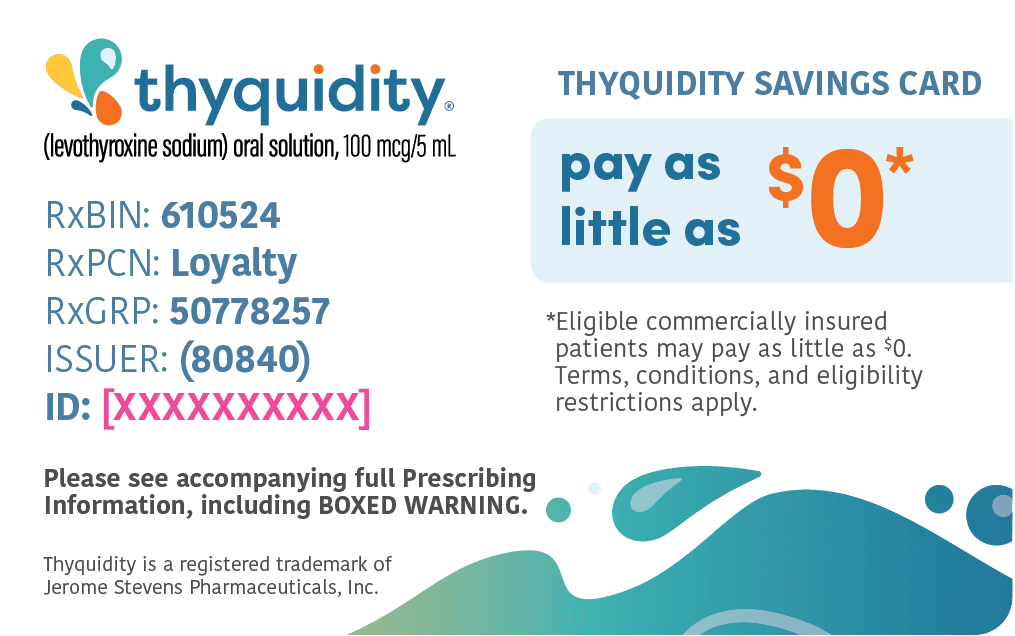
Patient can bring a physical card from your office to the pharmacy
Used with their insurance, it can help lower their costs
Applies a discount even if they pay cash
* Subject to the terms, conditions, and eligibility restrictions outlined below.

patients can have thyquidity sent to their home
patients can have thyquidity sent to their home
Home delivery†
Medications shipped directly to your patient
Automatic refills
Never miss a dose or run out
Transparent pricing‡
$99 for 100mL (1 bottle)
No substitutions
Guaranteed thyquidity every refill
No signature required
Hassle-free delivery
†
†
†
Commercially insured patients will not have their prescription processed through their insurance.
‡
‡
‡
Patients enrolling in Oliva2You may not utilize insurance benefits, including any federal, state, or government-funded insurance program. In addition, patients enrolling in Oliva2You may not have payments applied to true out-of-pocket (TrOOP) costs.

We believe every person deserves a thyroid treatment that fits, and we’re committed to supporting your care.
We believe every person deserves a thyroid treatment that fits, and we’re committed to supporting your care.
thyroid treatment that fits.
Oliva Therapeutics is proud to offer Thyquidity for patients who need something different—supporting providers in personalizing care with confidence.
thyroid treatment that fits.
Oliva Therapeutics is proud to offer Thyquidity for patients who need something different—supporting providers in personalizing care with confidence.
thyroid treatment that fits.
Oliva Therapeutics is proud to offer Thyquidity for patients who need something different—supporting providers in personalizing care with confidence.
TERMS, CONDITIONS, AND ELIGIBILITY CRITERIA
This card is not valid for prescriptions submitted for reimbursement to Medicare, Medicaid, Medigap, VA, DOD, or TriCare, or where prohibited by law; to other federal or state programs (including any state pharmaceutical assistance programs); or to private indemnity or HMO insurance plans that reimburse you for the entire cost of your prescription drugs. Patients may not use this card if Thyquidity is covered under their Medicare prescription drug plan or if they are Medicare-eligible and enrolled in an employer-sponsored health plan or prescription drug benefit program for retirees.
This card is good for use only with a Thyquidity prescription at the time the prescription is filled by the pharmacist and dispensed to the patient.
This offer is good for 18 uses per patient, per calendar year, or until the program expires, whichever comes first.
Maximum reimbursement limits apply; patient out-of-pocket expenses may vary.
Oliva reserves the right to rescind, revoke, or amend this offer without notice.
Offer good only in the US, except California and Massachusetts, at participating retail pharmacies.
Void if prohibited by law, taxed, or restricted.
The selling, purchasing, trading, or counterfeiting of this card is prohibited by law.
By clicking "Download Savings Card" below, I certify that I am not covered by:
Any federal or state healthcare program, such as Medicare, Medicaid, etc., including state medical or pharmaceutical assistance programs;
The Medicare Prescription Drug Program (Part D), or in the coverage gap; or
Insurance that is paying the entire cost of the prescription
I agree to this certification and have read and accepted the Program Terms, Conditions, and Eligibility Criteria.
I certify that I am 18 years of age or older and completing this for myself or a dependent.
TERMS, CONDITIONS, AND ELIGIBILITY CRITERIA
This card is not valid for prescriptions submitted for reimbursement to Medicare, Medicaid, Medigap, VA, DOD, or TriCare, or where prohibited by law; to other federal or state programs (including any state pharmaceutical assistance programs); or to private indemnity or HMO insurance plans that reimburse you for the entire cost of your prescription drugs. Patients may not use this card if Thyquidity is covered under their Medicare prescription drug plan or if they are Medicare-eligible and enrolled in an employer-sponsored health plan or prescription drug benefit program for retirees.
This card is good for use only with a Thyquidity prescription at the time the prescription is filled by the pharmacist and dispensed to the patient.
This offer is good for 18 uses per patient, per calendar year, or until the program expires, whichever comes first.
Maximum reimbursement limits apply; patient out-of-pocket expenses may vary.
Oliva reserves the right to rescind, revoke, or amend this offer without notice.
Offer good only in the US, except California and Massachusetts, at participating retail pharmacies.
Void if prohibited by law, taxed, or restricted.
The selling, purchasing, trading, or counterfeiting of this card is prohibited by law.
By clicking "Download Savings Card" below, I certify that I am not covered by:
Any federal or state healthcare program, such as Medicare, Medicaid, etc., including state medical or pharmaceutical assistance programs;
The Medicare Prescription Drug Program (Part D), or in the coverage gap; or
Insurance that is paying the entire cost of the prescription
I agree to this certification and have read and accepted the Program Terms, Conditions, and Eligibility Criteria.
I certify that I am 18 years of age or older and completing this for myself or a dependent.
TERMS, CONDITIONS, AND ELIGIBILITY CRITERIA
This card is not valid for prescriptions submitted for reimbursement to Medicare, Medicaid, Medigap, VA, DOD, or TriCare, or where prohibited by law; to other federal or state programs (including any state pharmaceutical assistance programs); or to private indemnity or HMO insurance plans that reimburse you for the entire cost of your prescription drugs. Patients may not use this card if Thyquidity is covered under their Medicare prescription drug plan or if they are Medicare-eligible and enrolled in an employer-sponsored health plan or prescription drug benefit program for retirees.
This card is good for use only with a Thyquidity prescription at the time the prescription is filled by the pharmacist and dispensed to the patient.
This offer is good for 18 uses per patient, per calendar year, or until the program expires, whichever comes first.
Maximum reimbursement limits apply; patient out-of-pocket expenses may vary.
Oliva reserves the right to rescind, revoke, or amend this offer without notice.
Offer good only in the US, except California and Massachusetts, at participating retail pharmacies.
Void if prohibited by law, taxed, or restricted.
The selling, purchasing, trading, or counterfeiting of this card is prohibited by law.
By clicking "Download Savings Card" below, I certify that I am not covered by:
Any federal or state healthcare program, such as Medicare, Medicaid, etc., including state medical or pharmaceutical assistance programs;
The Medicare Prescription Drug Program (Part D), or in the coverage gap; or
Insurance that is paying the entire cost of the prescription
I agree to this certification and have read and accepted the Program Terms, Conditions, and Eligibility Criteria.
I certify that I am 18 years of age or older and completing this for myself or a dependent.
INDICATIONS
THYQUIDITY is levothyroxine sodium (T4) indicated for:
Hypothyroidism: As replacement therapy in primary (thyroidal), secondary (pituitary), and tertiary (hypothalamic) congenital or acquired hypothyroidism.
Pituitary Thyrotropin (Thyroid-Stimulating Hormone, TSH) Suppression: As an adjunct to surgery and radioiodine therapy in the management of thyrotropin-dependent well-differentiated thyroid cancer.
Limitations of Use:
Not indicated for suppression of benign thyroid nodules and nontoxic diffuse goiter in iodine-sufficient patients
Not indicated for treatment of hypothyroidism during the recovery phase of subacute thyroiditis
IMPORTANT SAFETY INFORMATION
WARNING: NOT FOR TREATMENT OF OBESITY OR FOR WEIGHT LOSS
See full prescribing information for complete boxed warning
Thyroid hormones, including THYQUIDITY, should not be used for the treatment of obesity or for weight loss.
Doses beyond the range of daily hormonal requirements may produce serious or even life-threatening manifestations of toxicity.
contraindications
THYQUIDITY is contraindicated in patients with uncorrected adrenal insufficiency.
Warnings and Precautions
Cardiac Adverse Reactions in the Elderly and in Patients with Underlying Cardiovascular Disease: Over-treatment with levothyroxine may cause an increase in heart rate, cardiac wall thickness, and cardiac contractility and may precipitate angina or arrhythmias, particularly in patients with cardiovascular disease and in elderly patients. Initiate THYQUIDITY therapy in this population at lower doses than those recommended in younger individuals or in patients without cardiac disease.
Monitor for cardiac arrhythmias during surgical procedures in patients with coronary artery disease receiving suppressive THYQUIDITY therapy. Monitor patients receiving concomitant THYQUIDITY and sympathomimetic agents for signs and symptoms of coronary insufficiency.
If cardiac symptoms develop or worsen, reduce the THYQUIDITY dose or withhold for one week and restart at a lower dose.
Myxedema Coma: Myxedema coma is a life-threatening emergency characterized by poor circulation and hypometabolism, and may result in unpredictable absorption of levothyroxine sodium from the gastrointestinal tract. Use of oral thyroid hormone drug products is not recommended to treat myxedema coma. Administer thyroid hormone products formulated for intravenous administration to treat myxedema coma.
Acute Adrenal Crisis in Patients with Concomitant Adrenal Insufficiency: Thyroid hormone increases metabolic clearance of glucocorticoids. Initiation of thyroid hormone therapy prior to initiating glucocorticoid therapy may precipitate an acute adrenal crisis in patients with adrenal insufficiency. Treat patients with adrenal insufficiency with replacement glucocorticoids prior to initiating treatment with THYQUIDITY.
Prevention of Hyperthyroidism or Incomplete Treatment of Hypothyroidism: THYQUIDITY has a narrow therapeutic index. Over- or undertreatment with THYQUIDITY may have negative effects on growth and development, cardiovascular function, bone metabolism, reproductive function, cognitive function, emotional state, gastrointestinal function, and glucose and lipid metabolism. Titrate the dose of THYQUIDITY carefully and monitor response to titration to avoid these effects. Monitor for the presence of drug or food interactions when using THYQUIDITY and adjust the dose as necessary.
Worsening of Diabetic Control: Addition of levothyroxine therapy in patients with diabetes mellitus may worsen glycemic control and result in increased antidiabetic agent or insulin requirements. Carefully monitor glycemic control after starting, changing, or discontinuing THYQUIDITY.
Decreased Bone Mineral Density Associated with Thyroid Hormone Over-Replacement: Increased bone resorption and decreased bone mineral density may occur as a result of levothyroxine over-replacement, particularly in post-menopausal women. The increased bone resorption may be associated with increased serum levels and urinary excretion of calcium and phosphorous, elevations in bone alkaline phosphatase, and suppressed serum parathyroid hormone levels. Administer the minimum dose of THYQUIDITY that achieves the desired clinical and biochemical response to mitigate this risk.
Adverse Reactions
Adverse reactions associated with THYQUIDITY therapy are primarily those of hyperthyroidism due to therapeutic overdosage: arrhythmias, myocardial infarction, dyspnea, muscle spasm, headache, nervousness, irritability, insomnia, tremors, muscle weakness, increased appetite, weight loss, diarrhea, heat intolerance, menstrual irregularities, and skin rash.
Drug Interactions
Many drugs can affect thyroid hormone pharmacokinetics (e.g., absorption, synthesis, secretion, metabolism, protein binding, and target tissue response) and may alter the therapeutic response to THYQUIDITY (see full Prescribing Information for additional details).
Use in Specific Populations
Pregnancy: Since TSH levels may increase during pregnancy, TSH should be monitored and THYQUIDITY dosage adjusted during pregnancy. THYQUIDITY should not be discontinued during pregnancy and hypothyroidism diagnosed during pregnancy should be promptly treated. Pregnancy may increase THYQUIDITY requirements. Serum TSH levels should be monitored and the THYQUIDITY dosage adjusted during pregnancy to maintain TSH within normal trimester specific ranges. Since postpartum TSH levels are similar to preconception values, the THYQUIDITY dosage should return to the pre-pregnancy dose immediately after delivery.
Lactation: Limited published studies report that levothyroxine is present in human milk. No adverse effects on the breastfed infant have been reported and there is no information on the effects of levothyroxine on milk production. Adequate levothyroxine treatment during lactation may normalize milk production in hypothyroid lactating mothers with low milk supply. The developmental and health benefits of breastfeeding should be considered along with the mother's clinical need for THYQUIDITY and any potential adverse effects on the breastfed infant from THYQUIDITY or from the underlying maternal condition.
Pediatric Use: Safety and effectiveness of THYQUIDITY has been established for the treatment of congenital hypothyroidism and acquired hypothyroidism in pediatric patients down to birth.
Glycerol has the potential to cause gastrointestinal irritation resulting in vomiting and/or osmotic diarrhea. Patients in the first 3 months of life may be particularly susceptible to serious fluid and electrolyte complications from glycerol-induced gastrointestinal irritation. Closely monitor patients from birth to 3 months of age receiving THYQUIDITY for signs and symptoms of gastrointestinal irritation.
Geriatric Use: Because of the increased prevalence of cardiovascular disease among the elderly, initiate THYQUIDITY at less than the full replacement dose. Atrial arrhythmias can occur in elderly patients. Atrial fibrillation is the most common of the arrhythmias observed with levothyroxine overtreatment in the elderly.
To report SUSPECTED ADVERSE REACTIONS, contact Oliva Therapeutics, LLC at 1-877-200-6088, or FDA at 1-800-FDA-1088 or www.fda.gov/MedWatch.
Please see the full Prescribing Information including BOXED WARNING.
All patient and physician images are representative only.
INDICATIONS
THYQUIDITY is levothyroxine sodium (T4) indicated for:
Hypothyroidism: As replacement therapy in primary (thyroidal), secondary (pituitary), and tertiary (hypothalamic) congenital or acquired hypothyroidism.
Pituitary Thyrotropin (Thyroid-Stimulating Hormone, TSH) Suppression: As an adjunct to surgery and radioiodine therapy in the management of thyrotropin-dependent well-differentiated thyroid cancer.
Limitations of Use:
Not indicated for suppression of benign thyroid nodules and nontoxic diffuse goiter in iodine-sufficient patients
Not indicated for treatment of hypothyroidism during the recovery phase of subacute thyroiditis
IMPORTANT SAFETY INFORMATION
WARNING: NOT FOR TREATMENT OF OBESITY OR FOR WEIGHT LOSS
See full prescribing information for complete boxed warning
Thyroid hormones, including THYQUIDITY, should not be used for the treatment of obesity or for weight loss.
Doses beyond the range of daily hormonal requirements may produce serious or even life-threatening manifestations of toxicity.
contraindications
THYQUIDITY is contraindicated in patients with uncorrected adrenal insufficiency.
Warnings and Precautions
Cardiac Adverse Reactions in the Elderly and in Patients with Underlying Cardiovascular Disease: Over-treatment with levothyroxine may cause an increase in heart rate, cardiac wall thickness, and cardiac contractility and may precipitate angina or arrhythmias, particularly in patients with cardiovascular disease and in elderly patients. Initiate THYQUIDITY therapy in this population at lower doses than those recommended in younger individuals or in patients without cardiac disease.
Monitor for cardiac arrhythmias during surgical procedures in patients with coronary artery disease receiving suppressive THYQUIDITY therapy. Monitor patients receiving concomitant THYQUIDITY and sympathomimetic agents for signs and symptoms of coronary insufficiency.
If cardiac symptoms develop or worsen, reduce the THYQUIDITY dose or withhold for one week and restart at a lower dose.
Myxedema Coma: Myxedema coma is a life-threatening emergency characterized by poor circulation and hypometabolism, and may result in unpredictable absorption of levothyroxine sodium from the gastrointestinal tract. Use of oral thyroid hormone drug products is not recommended to treat myxedema coma. Administer thyroid hormone products formulated for intravenous administration to treat myxedema coma.
Acute Adrenal Crisis in Patients with Concomitant Adrenal Insufficiency: Thyroid hormone increases metabolic clearance of glucocorticoids. Initiation of thyroid hormone therapy prior to initiating glucocorticoid therapy may precipitate an acute adrenal crisis in patients with adrenal insufficiency. Treat patients with adrenal insufficiency with replacement glucocorticoids prior to initiating treatment with THYQUIDITY.
Prevention of Hyperthyroidism or Incomplete Treatment of Hypothyroidism: THYQUIDITY has a narrow therapeutic index. Over- or undertreatment with THYQUIDITY may have negative effects on growth and development, cardiovascular function, bone metabolism, reproductive function, cognitive function, emotional state, gastrointestinal function, and glucose and lipid metabolism. Titrate the dose of THYQUIDITY carefully and monitor response to titration to avoid these effects. Monitor for the presence of drug or food interactions when using THYQUIDITY and adjust the dose as necessary.
Worsening of Diabetic Control: Addition of levothyroxine therapy in patients with diabetes mellitus may worsen glycemic control and result in increased antidiabetic agent or insulin requirements. Carefully monitor glycemic control after starting, changing, or discontinuing THYQUIDITY.
Decreased Bone Mineral Density Associated with Thyroid Hormone Over-Replacement: Increased bone resorption and decreased bone mineral density may occur as a result of levothyroxine over-replacement, particularly in post-menopausal women. The increased bone resorption may be associated with increased serum levels and urinary excretion of calcium and phosphorous, elevations in bone alkaline phosphatase, and suppressed serum parathyroid hormone levels. Administer the minimum dose of THYQUIDITY that achieves the desired clinical and biochemical response to mitigate this risk.
Adverse Reactions
Adverse reactions associated with THYQUIDITY therapy are primarily those of hyperthyroidism due to therapeutic overdosage: arrhythmias, myocardial infarction, dyspnea, muscle spasm, headache, nervousness, irritability, insomnia, tremors, muscle weakness, increased appetite, weight loss, diarrhea, heat intolerance, menstrual irregularities, and skin rash.
Drug Interactions
Many drugs can affect thyroid hormone pharmacokinetics (e.g., absorption, synthesis, secretion, metabolism, protein binding, and target tissue response) and may alter the therapeutic response to THYQUIDITY (see full Prescribing Information for additional details).
Use in Specific Populations
Pregnancy: Since TSH levels may increase during pregnancy, TSH should be monitored and THYQUIDITY dosage adjusted during pregnancy. THYQUIDITY should not be discontinued during pregnancy and hypothyroidism diagnosed during pregnancy should be promptly treated. Pregnancy may increase THYQUIDITY requirements. Serum TSH levels should be monitored and the THYQUIDITY dosage adjusted during pregnancy to maintain TSH within normal trimester specific ranges. Since postpartum TSH levels are similar to preconception values, the THYQUIDITY dosage should return to the pre-pregnancy dose immediately after delivery.
Lactation: Limited published studies report that levothyroxine is present in human milk. No adverse effects on the breastfed infant have been reported and there is no information on the effects of levothyroxine on milk production. Adequate levothyroxine treatment during lactation may normalize milk production in hypothyroid lactating mothers with low milk supply. The developmental and health benefits of breastfeeding should be considered along with the mother's clinical need for THYQUIDITY and any potential adverse effects on the breastfed infant from THYQUIDITY or from the underlying maternal condition.
Pediatric Use: Safety and effectiveness of THYQUIDITY has been established for the treatment of congenital hypothyroidism and acquired hypothyroidism in pediatric patients down to birth.
Glycerol has the potential to cause gastrointestinal irritation resulting in vomiting and/or osmotic diarrhea. Patients in the first 3 months of life may be particularly susceptible to serious fluid and electrolyte complications from glycerol-induced gastrointestinal irritation. Closely monitor patients from birth to 3 months of age receiving THYQUIDITY for signs and symptoms of gastrointestinal irritation.
Geriatric Use: Because of the increased prevalence of cardiovascular disease among the elderly, initiate THYQUIDITY at less than the full replacement dose. Atrial arrhythmias can occur in elderly patients. Atrial fibrillation is the most common of the arrhythmias observed with levothyroxine overtreatment in the elderly.
To report SUSPECTED ADVERSE REACTIONS, contact Oliva Therapeutics, LLC at 1-877-200-6088, or FDA at 1-800-FDA-1088 or www.fda.gov/MedWatch.
Please see the full Prescribing Information including BOXED WARNING.
All patient and physician images are representative only.
INDICATIONS
THYQUIDITY is levothyroxine sodium (T4) indicated for:
Hypothyroidism: As replacement therapy in primary (thyroidal), secondary (pituitary), and tertiary (hypothalamic) congenital or acquired hypothyroidism.
Pituitary Thyrotropin (Thyroid-Stimulating Hormone, TSH) Suppression: As an adjunct to surgery and radioiodine therapy in the management of thyrotropin-dependent well-differentiated thyroid cancer.
Limitations of Use:
Not indicated for suppression of benign thyroid nodules and nontoxic diffuse goiter in iodine-sufficient patients
Not indicated for treatment of hypothyroidism during the recovery phase of subacute thyroiditis
IMPORTANT SAFETY INFORMATION
WARNING: NOT FOR TREATMENT OF OBESITY OR FOR WEIGHT LOSS
See full prescribing information for complete boxed warning
Thyroid hormones, including THYQUIDITY, should not be used for the treatment of obesity or for weight loss.
Doses beyond the range of daily hormonal requirements may produce serious or even life-threatening manifestations of toxicity.
contraindications
THYQUIDITY is contraindicated in patients with uncorrected adrenal insufficiency.
Warnings and Precautions
Cardiac Adverse Reactions in the Elderly and in Patients with Underlying Cardiovascular Disease: Over-treatment with levothyroxine may cause an increase in heart rate, cardiac wall thickness, and cardiac contractility and may precipitate angina or arrhythmias, particularly in patients with cardiovascular disease and in elderly patients. Initiate THYQUIDITY therapy in this population at lower doses than those recommended in younger individuals or in patients without cardiac disease.
Monitor for cardiac arrhythmias during surgical procedures in patients with coronary artery disease receiving suppressive THYQUIDITY therapy. Monitor patients receiving concomitant THYQUIDITY and sympathomimetic agents for signs and symptoms of coronary insufficiency.
If cardiac symptoms develop or worsen, reduce the THYQUIDITY dose or withhold for one week and restart at a lower dose.
Myxedema Coma: Myxedema coma is a life-threatening emergency characterized by poor circulation and hypometabolism, and may result in unpredictable absorption of levothyroxine sodium from the gastrointestinal tract. Use of oral thyroid hormone drug products is not recommended to treat myxedema coma. Administer thyroid hormone products formulated for intravenous administration to treat myxedema coma.
Acute Adrenal Crisis in Patients with Concomitant Adrenal Insufficiency: Thyroid hormone increases metabolic clearance of glucocorticoids. Initiation of thyroid hormone therapy prior to initiating glucocorticoid therapy may precipitate an acute adrenal crisis in patients with adrenal insufficiency. Treat patients with adrenal insufficiency with replacement glucocorticoids prior to initiating treatment with THYQUIDITY.
Prevention of Hyperthyroidism or Incomplete Treatment of Hypothyroidism: THYQUIDITY has a narrow therapeutic index. Over- or undertreatment with THYQUIDITY may have negative effects on growth and development, cardiovascular function, bone metabolism, reproductive function, cognitive function, emotional state, gastrointestinal function, and glucose and lipid metabolism. Titrate the dose of THYQUIDITY carefully and monitor response to titration to avoid these effects. Monitor for the presence of drug or food interactions when using THYQUIDITY and adjust the dose as necessary.
Worsening of Diabetic Control: Addition of levothyroxine therapy in patients with diabetes mellitus may worsen glycemic control and result in increased antidiabetic agent or insulin requirements. Carefully monitor glycemic control after starting, changing, or discontinuing THYQUIDITY.
Decreased Bone Mineral Density Associated with Thyroid Hormone Over-Replacement: Increased bone resorption and decreased bone mineral density may occur as a result of levothyroxine over-replacement, particularly in post-menopausal women. The increased bone resorption may be associated with increased serum levels and urinary excretion of calcium and phosphorous, elevations in bone alkaline phosphatase, and suppressed serum parathyroid hormone levels. Administer the minimum dose of THYQUIDITY that achieves the desired clinical and biochemical response to mitigate this risk.
Adverse Reactions
Adverse reactions associated with THYQUIDITY therapy are primarily those of hyperthyroidism due to therapeutic overdosage: arrhythmias, myocardial infarction, dyspnea, muscle spasm, headache, nervousness, irritability, insomnia, tremors, muscle weakness, increased appetite, weight loss, diarrhea, heat intolerance, menstrual irregularities, and skin rash.
Drug Interactions
Many drugs can affect thyroid hormone pharmacokinetics (e.g., absorption, synthesis, secretion, metabolism, protein binding, and target tissue response) and may alter the therapeutic response to THYQUIDITY (see full Prescribing Information for additional details).
Use in Specific Populations
Pregnancy: Since TSH levels may increase during pregnancy, TSH should be monitored and THYQUIDITY dosage adjusted during pregnancy. THYQUIDITY should not be discontinued during pregnancy and hypothyroidism diagnosed during pregnancy should be promptly treated. Pregnancy may increase THYQUIDITY requirements. Serum TSH levels should be monitored and the THYQUIDITY dosage adjusted during pregnancy to maintain TSH within normal trimester specific ranges. Since postpartum TSH levels are similar to preconception values, the THYQUIDITY dosage should return to the pre-pregnancy dose immediately after delivery.
Lactation: Limited published studies report that levothyroxine is present in human milk. No adverse effects on the breastfed infant have been reported and there is no information on the effects of levothyroxine on milk production. Adequate levothyroxine treatment during lactation may normalize milk production in hypothyroid lactating mothers with low milk supply. The developmental and health benefits of breastfeeding should be considered along with the mother's clinical need for THYQUIDITY and any potential adverse effects on the breastfed infant from THYQUIDITY or from the underlying maternal condition.
Pediatric Use: Safety and effectiveness of THYQUIDITY has been established for the treatment of congenital hypothyroidism and acquired hypothyroidism in pediatric patients down to birth.
Glycerol has the potential to cause gastrointestinal irritation resulting in vomiting and/or osmotic diarrhea. Patients in the first 3 months of life may be particularly susceptible to serious fluid and electrolyte complications from glycerol-induced gastrointestinal irritation. Closely monitor patients from birth to 3 months of age receiving THYQUIDITY for signs and symptoms of gastrointestinal irritation.
Geriatric Use: Because of the increased prevalence of cardiovascular disease among the elderly, initiate THYQUIDITY at less than the full replacement dose. Atrial arrhythmias can occur in elderly patients. Atrial fibrillation is the most common of the arrhythmias observed with levothyroxine overtreatment in the elderly.
To report SUSPECTED ADVERSE REACTIONS, contact Oliva Therapeutics, LLC at 1-877-200-6088, or FDA at 1-800-FDA-1088 or www.fda.gov/MedWatch.
Please see the full Prescribing Information including BOXED WARNING.
All patient and physician images are representative only.
Thyquidity is a registered trademark of Jerome Stevens Pharmaceuticals, Inc.
© 2026 Oliva Therepeutics. All rights reserved. US-THY-25002-05/26
This site is intended for U.S. healthcare professionals only.
Thyquidity is a registered trademark of Jerome Stevens Pharmaceuticals, Inc.
© 2026 Oliva Therepeutics. All rights reserved.
US-THY-25002-05/26
This site is intended for U.S. healthcare professionals only.
Thyquidity is a registered trademark of Jerome Stevens Pharmaceuticals, Inc.
© 2026 Oliva Therepeutics. All rights reserved. US-THY-25004-05/26
This site is intended for U.S. healthcare professionals only.